Workshops
Training "Pathways to AACSB Accreditation under the 2026 Global Standards for Business Education"
Venue: Online - ZOOM
|
Pathways to AACSB Accreditation under the 2026 Global Standards for Business Education Training Program | October 30, 2026 |
|||
|
Introduction: |
|||
|
This three-hour online training brings together the practical accreditation experiences of prominent Pakistani business schools and provides participants with an applied understanding of the AACSB accreditation journey. The training will take participants through the accreditation process in a clear and practical manner—from understanding the philosophy and eligibility requirements of AACSB accreditation to institutional readiness, learner success, faculty and teaching quality, impact, and effective preparation for engagement with the AACSB peer review team. The focus will remain on the most important requirements, practical experiences, institutional challenges, and lessons that can help business schools understand and prepare for AACSB accreditation. |
|||
|
Training Objectives: |
|||
|
By the end of the training, participants will be able to:
|
|||
|
Learning Outcomes: |
|||
|
By the end of the workshop, participants will be able to:
|
|||
|
Benefits of the Training: |
|||
|
The training will help participants:
|
|||
|
Target Audience: |
|||
|
|||
|
Trainers: |
|||
|
|||
|
Registration Fee: |
|||
|
15,000/- PKR (per person) |
|||
|
Notes: |
|||
** If unforeseen circumstances occurs during the workshop and one day before the scheduled workshop, NBEAC will not refund the registration fee. |
|||
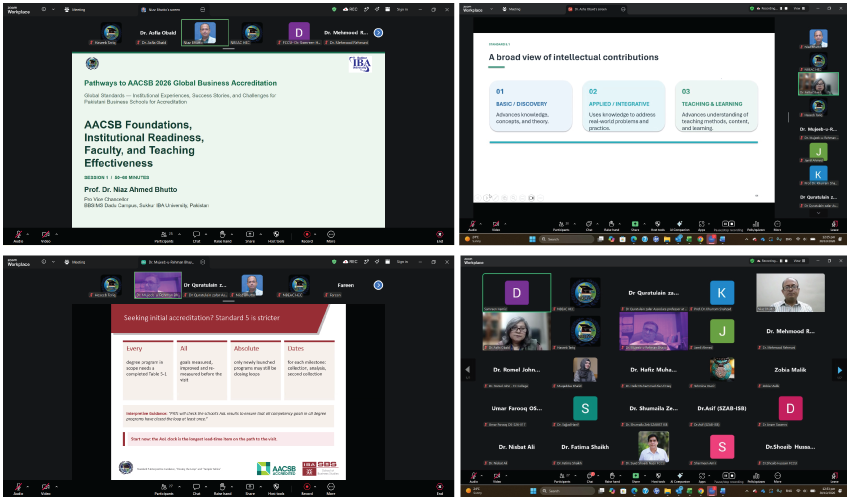
The Training & Development Wing of the NBEAC organized a three-hour online training titled “Pathways to AACSB Accreditation under the 2026 Global Standards for Business Education: Institutional Experiences, Practical Challenges, and Lessons for Business Schools” on October 30, 2026.
The training was designed to provide business schools with a practical understanding of the AACSB accreditation journey, with particular emphasis on the requirements of the 2026 Global Standards. The session covered key stages of the accreditation process, including philosophy and eligibility, institutional readiness, learner success, faculty and teaching quality, impact, and preparation for peer review.
The training was led by Prof. Dr. Niaz Ahmed Bhutto, Pro Vice Chancellor, BBSIMS Dadu Campus, Sukkur IBA University; Dr. Asfia Obaid, Head of Department, NUST Business School, NUST; and Dr. Mujeeb Bhayo, Assistant Professor, IBA Karachi. The resource persons shared their institutional experiences and practical insights into preparing for international accreditation, addressing readiness gaps, strengthening academic quality systems, and effectively engaging with AACSB peer review teams.
During the session, participants were provided insights into important institutional systems and processes required for accreditation, including strategic planning, faculty and resources, curriculum, Assurance of Learning, learner progression, teaching effectiveness, scholarship, and societal impact. The speakers also highlighted common challenges faced by business schools during the accreditation journey and shared practical lessons based on their institutional experiences.
The training brought together around 30 participants including Deans, Directors, Heads of Business Schools, accreditation coordinators, quality assurance professionals, faculty members, and academic leaders interested in strengthening institutional quality and pursuing international accreditation.
The initiative reflects NBEAC’s continued commitment to strengthening the quality of business education in Pakistan by providing business schools with opportunities to learn from institutional experiences, international accreditation practices, and emerging global standards.
Powered by iCagenda
About NBEAC
NBEAC has three main functions: accreditation, training and networking. In its accreditation function, it develops and implements standards to improve the quality of business education in Pakistan. In its training function, it provides opportunities to faculty and managers to learn about quality standards and related matters. In its networking function, it provides a forum for business education professionals to learn from each other through conferences and seminars.